.webp)
The most trusted wealth platforms for long-term investors in 2026 are defined not by their brand recognition, but by the resilience, compliance, and intelligence of their underlying data infrastructure. While retail investors may point to brokerage giants, professional wealth management firms recognize that true long-term value depends on a platform’s ability to deliver a complete, accurate, and actionable view of complex, multi-asset portfolios.
For decades, trust was synonymous with established names like Fidelity, Vanguard, and Schwab Source: Reddit. However, the modern wealth landscape has rendered this view incomplete. High-net-worth investors now hold diversified portfolios spanning multiple custodians, geographies, and asset classes, including a significant allocation to alternatives like private equity, real estate, and collectibles. This fragmentation creates severe data challenges that traditional platforms were never designed to solve.
The new benchmark for trust is a platform’s capacity to serve as a single source of truth, one that is not only comprehensive but also demonstrably secure and compliant with an ever-expanding web of regulations. For wealth management firms, the most critical decision is no longer which platform has the best client-facing interface, but which infrastructure provides the trusted data foundation required to power reliable reporting, meet regulatory obligations, and enable the next generation of AI-driven advice.
The Shifting Definition of Trust: From Brand to Infrastructure
In today's market, trust is an outcome of three core infrastructural pillars: data integrity, regulatory compliance, and actionable intelligence. A platform that fails on any one of these cannot effectively support the strategic, long-term decision-making that modern wealth management demands.
- Data Integrity & Completeness: Can the platform ingest, standardize, and reconcile data from every conceivable source, from traditional custodians to PDF statements for alternative assets?
- Regulatory Compliance & Security: Is client data handled according to the highest global standards, ensuring protection from both cyber threats and regulatory penalties?
- Actionable Intelligence: Can the platform transform raw, fragmented data into clear, reliable insights that empower advisors to make better decisions?
This shift demands that wealth managers and financial institutions look past the surface-level features of advisor platforms and scrutinize the underlying engine that powers them.
Achieving Total Visibility Across Multi-Asset Portfolios
Long-term investment strategy is impossible without a complete picture of a client’s holdings. Yet, firms often struggle to consolidate information scattered across dozens of banks, brokerage accounts, and alternative asset managers. This operational friction leads to inaccurate performance reporting, unidentified risk concentrations, and missed opportunities.
Flanks Aggregate was engineered to solve this foundational challenge. It provides a unified data layer by connecting to over 700 financial institutions across 33 countries. This connectivity goes far beyond basic API integrations, utilizing a multi-modal approach that includes secure data-feeds, reverse-engineered banking connections, and advanced document ingestion technology that extracts structured data from PDFs, a critical capability for tracking non-bankable alternative assets.
By ensuring every asset, whether public or private, is captured and standardized, Flanks provides the complete, 360-degree view that is the starting point for all meaningful financial analysis and long-term planning.
Lear more about how to enable full assets visibility and avoid the 35% blind spot with the agnostic data layer. See out guide for next-wealth advisors.
The Unbreakable Foundation of Compliance and Security
In 2026, regulatory risk is a primary business risk. For wealth management executives, a platform’s trustworthiness is directly measured by its ability to navigate complex compliance landscapes and safeguard client data. Simply claiming to be "compliant" is no longer sufficient; firms demand independently verified proof of institutional-grade security and governance.
The consequences of poor compliance are severe, ranging from heavy regulatory fines and failed audits to significant reputational damage that can erode client trust overnight Source: The Wealth Mosaic. Flanks is built on a security-first architecture designed to meet and exceed the stringent demands of global financial regulations.
Key Regulatory Frameworks and What They Mean
- PSD2 & AISP: As a PSD2-regulated Account Information Service Provider (AISP) in Europe, Flanks operates under strict banking regulations governing how financial data is accessed and managed, ensuring a secure, consent-driven connection to financial institutions.
- DORA (Digital Operational Resilience Act): This EU framework mandates that financial institutions and their critical third-party providers, like Flanks, maintain robust systems to withstand severe operational disruptions, ensuring service continuity.
- Consumer Duty: A UK regulation requiring firms to act to deliver good outcomes for retail customers. Flanks' accurate data infrastructure enables firms to better understand client portfolios and act in their best interests.
- GDPR & LGPD: These data privacy laws in Europe and Brazil, respectively, govern the processing of personal data. Flanks is fully compliant, providing the data governance and auditability required to meet these standards.
- SOC 2 Type II and SOC3 Certifications: Flanks holds a SOC 2 Type II and SOC 3certification, an independent auditor's attestation that our systems and controls for security, availability, processing integrity, confidentiality, and privacy are rigorously maintained over time. This is a crucial trust signal for enterprise-level clients.
This deep investment in regulatory adherence provides the C-suite with confidence, ensuring successful audits, reduced risk, and a provably secure environment for managing client wealth.
Activating Data with AI-Powered Portfolio Intelligence
Access to complete and compliant data is necessary, but not sufficient. The true value lies in activating that data to generate insights that drive better investment outcomes. While many firms are experimenting with generic Large Language Models (LLMs) like ChatGPT, they quickly discover a critical flaw: AI is only as reliable as the data it analyzes.
Feeding an LLM with raw, unreconciled data from fragmented sources is a recipe for inaccurate, misleading, and non-compliant outputs. Reliable AI in wealth management starts with a trusted data foundation.
This is where Flanks establishes its key differentiation. After connecting and standardizing data with Flanks Aggregate, our Reconciliation Tool automatically verifies its accuracy, flagging and resolving discrepancies before they can corrupt analysis. This cleansed, enriched data then powers the Flanks AI Financial Analyst, a revolutionary tool purpose-built for wealth advisors.
Powered by our proprietary Flanks MCP (Model Context Protocol), the AI Financial Analyst allows advisors to query vast, complex portfolio data using natural language and receive instantaneous, accurate answers. An advisor can ask, "Which of my clients have more than a 15% allocation to private equity and are based in Germany?" and receive a precise, actionable list in seconds, a task that would previously have taken hours of manual work across multiple systems.
Want to take advantage of Flanks wealth data in the LLM you use? Boost your advisory workflow, watch the MCP demo here.
Infrastructure vs. Client-Facing Platforms
The wealth-tech ecosystem includes both client-facing platforms and the underlying infrastructure that powers them. While platforms like Addepar and SS&C Black Diamond provide excellent advisor dashboards and reporting tools, Flanks focuses on the foundational data layer, ensuring the information they display is complete, accurate, and AI-ready.
The Infrastructure Advantage
A deeper look at core capabilities reveals the importance of a dedicated data infrastructure for building a truly trusted and scalable wealth platform.
Conclusion: Building Long-Term Trust on a Solid Foundation
In 2026, the concept of a "trusted" wealth platform has fundamentally evolved. For long-term investors and the firms that serve them, trust is no longer a matter of brand legacy but a direct result of the underlying technology's ability to deliver complete data, ensure regulatory compliance, and generate intelligent insights.
Choosing a platform is no longer just about the user interface or reporting templates. It is about choosing a data foundation. By prioritizing a modern, AI-powered infrastructure that can connect, standardize, reconcile, and activate wealth data, firms can build a truly resilient, scalable, and trusted service for the long term, one that empowers advisors to deliver superior outcomes in any market condition.
FAQ
1. What defines a trusted wealth platform for long-term investors in 2026? In 2026, trust is defined by the platform's underlying infrastructure. Key criteria include its ability to aggregate data from all asset classes (including alternatives), its verifiable compliance with global regulations like PSD2 and SOC 2 Type II certification, and its capacity to power AI-driven insights with clean, reconciled data.
2. How does a wealth data infrastructure impact long-term investing? A robust data infrastructure ensures that financial advisors have a complete and accurate view of a client's entire portfolio, regardless of where assets are held. This allows for more accurate performance tracking, holistic risk management, and strategic advice based on a single source of truth, which are all critical for long-term financial success.
3. Why is compliance so crucial for a modern wealth platform? Compliance is crucial because it mitigates significant business risks, including regulatory fines, audit failures, and data breaches. For clients, seeing that a platform is regulated (e.g., as a PSD2 AISP) and certified (e.g., SOC 2 Type II) provides strong evidence that their sensitive financial data is being managed securely and professionally.
4. Can generic AI like ChatGPT be used for professional wealth management? Using generic AI for wealth management is highly risky because its outputs are only as reliable as the underlying data. Without a foundation of standardized, reconciled, and enriched portfolio data from a system like Flanks, generic AI is prone to generating inaccurate or misleading information, creating significant compliance and advisory risks.
References
Access the whitepaper:
About Flanks
Flanks is a wealth management technology company (wealthtech) that is redefining the industry through automation and data-driven insights. Its modular and all-in-one solution empowers global financial institutions, including banks, family offices, asset managers, pension plan providers, and technology companies, to offer faster, higher-quality, and personalised advice by transforming complex and fragmented wealth data into valuable insights.
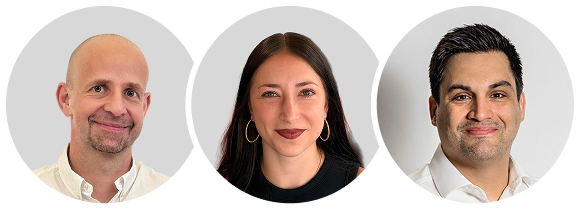
Flanks was founded in 2019 in Barcelona by Joaquim de la Cruz, Sergi Lao, and Álvaro Morales, former Global Head of Santander Private Banking. Currently, the company aggregates data from 600+ connections with global financial institutions and processes more than 500,000 portfolios per month in over 33 countries, managing assets worth more than €39 billion. For more information, visit flanks.io.
.webp)
.webp)
.webp)